
Find your nearest Buffalo Ophthalmology location.
Uveitis Treatment in Buffalo, NY

Our Locations
Schedule Appointment
Schedule your appointment with one of our specialists.
Our Eye Doctor

What is Uveitis?
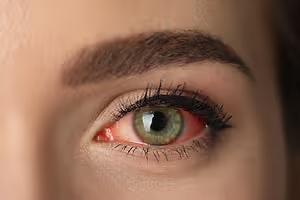
Uveitis is inflammation of the uvea—the middle layer of the eye. This includes the iris (the colored part of your eye), the ciliary body (which helps focus your vision), and the choroid (which supplies blood to the retina). The uvea plays a vital role in your vision, and when it becomes inflamed, it can cause eye pain, redness, light sensitivity, and blurred vision.
While not every case of uveitis is serious, some require the attention of a specialist:
Can Affect Different Parts of the Eye
Depending on the type, uveitis can impact the iris, ciliary body, choroid, or all three.
May Signal a Larger Health Issue
In some cases, uveitis is linked to autoimmune conditions like Crohn’s disease or rheumatoid arthritis.
Untreated Uveitis Can Lead to Vision Loss
If not managed properly, uveitis can cause glaucoma, cataracts, and retinal damage.
Why Uveitis Requires Specialized Care
Because of the pain, complexity, and potential for long-term damage, getting care from a uveitis specialist is essential. Every case is different, and each patient deserves a personalized approach based on their diagnosis and needs.
Buffalo Ophthalmology's uveitis care is led by Ausra Selvadurai, M.D., a Bascom Palmer–trained retina specialist and the leading uveitis expert in Western New York. Her dual expertise in retina care and uveitis allows for a more complete understanding of the disease’s impact.
Given the chronic nature of many uveitis cases, Dr. Selvadurai emphasizes ongoing communication. Whether she's managing your care independently or co-managing with your primary provider, her goal is always to protect your vision, reduce inflammation, and help you maintain long-term comfort and clarity.
Uveitis Diagnosis & Management in Buffalo, NY
Because of uveitis’ potential to cause serious complications, treatment begins with a comprehensive understanding of your medical and ocular history. We use advanced diagnostic technology to pinpoint exactly what’s happening inside your eye. We’ll walk you through the findings, explain your condition, and work with you to create a personalized treatment plan.
Uveitis treatment focuses on reducing inflammation, managing symptoms, and addressing the root cause of the disease. Because there are several types of uveitis—and different factors that contribute to each—Dr. Selvadurai will recommend a treatment approach tailored to your case.
Anterior Uveitis
Anterior uveitis involves inflammation in the front of the eye, primarily affecting the iris and sometimes the ciliary body. Treatment commonly includes corticosteroid eye drops to reduce inflammation and dilating drops to relieve discomfort and help prevent complications. Additional evaluation or treatment may be recommended depending on the cause and severity.
Intermediate Uveitis
Intermediate uveitis primarily affects the vitreous and peripheral retina. Treatment depends on the severity of the inflammation, its underlying cause, and whether complications such as macular edema are present. Options may include injections around or inside the eye, oral corticosteroids, or steroid-sparing immunomodulatory therapy.
Posterior Uveitis
Posterior uveitis affects structures in the back of the eye, including the retina or choroid. Treatment varies considerably depending on whether the inflammation is infectious or noninfectious. It may include antimicrobial medication, local or systemic corticosteroids, or immunomodulatory therapy.
Pan-uveitis
Panuveitis involves inflammation in the front, middle, and back of the eye. Because it can affect multiple ocular structures and may be associated with an underlying systemic condition, treatment often requires a comprehensive evaluation and an individualized combination of local or systemic therapy.

Take the First Step Toward Relief
If you’ve been diagnosed with uveitis or are experiencing symptoms that haven’t been explained, Buffalo Ophthalmology is here to help. With advanced diagnostics, compassionate care, and years of specialty experience, we’re ready to guide you toward answers and lasting relief.